©陶陶居藝廊擁有所有照片的版權, 嚴禁盜用
©Tao Tao Art holding the copyright of all photos. Unauthorized use is strictly prohibited.


「智人無形。真悲無聲。感應道交。沙白水清。」
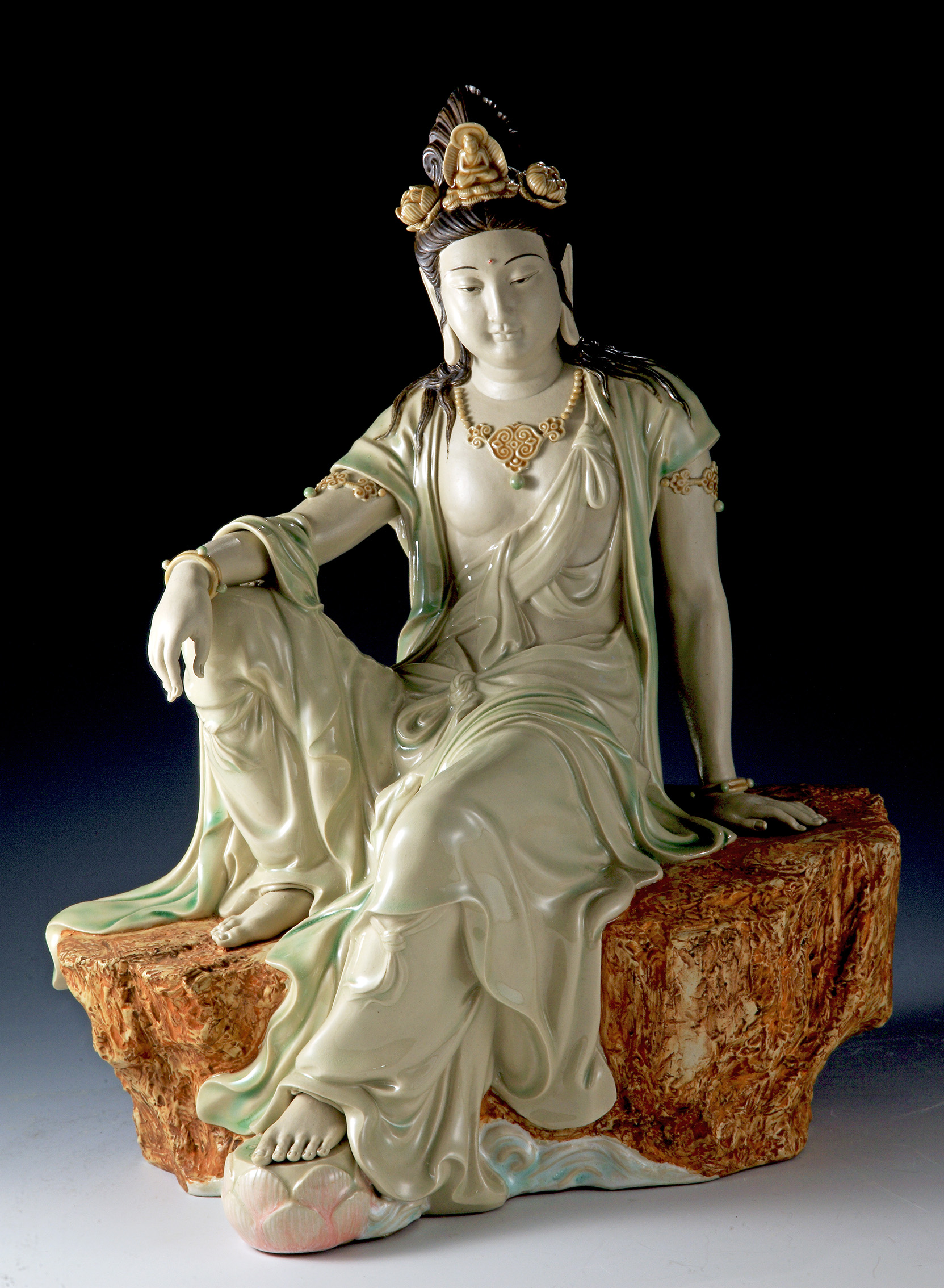
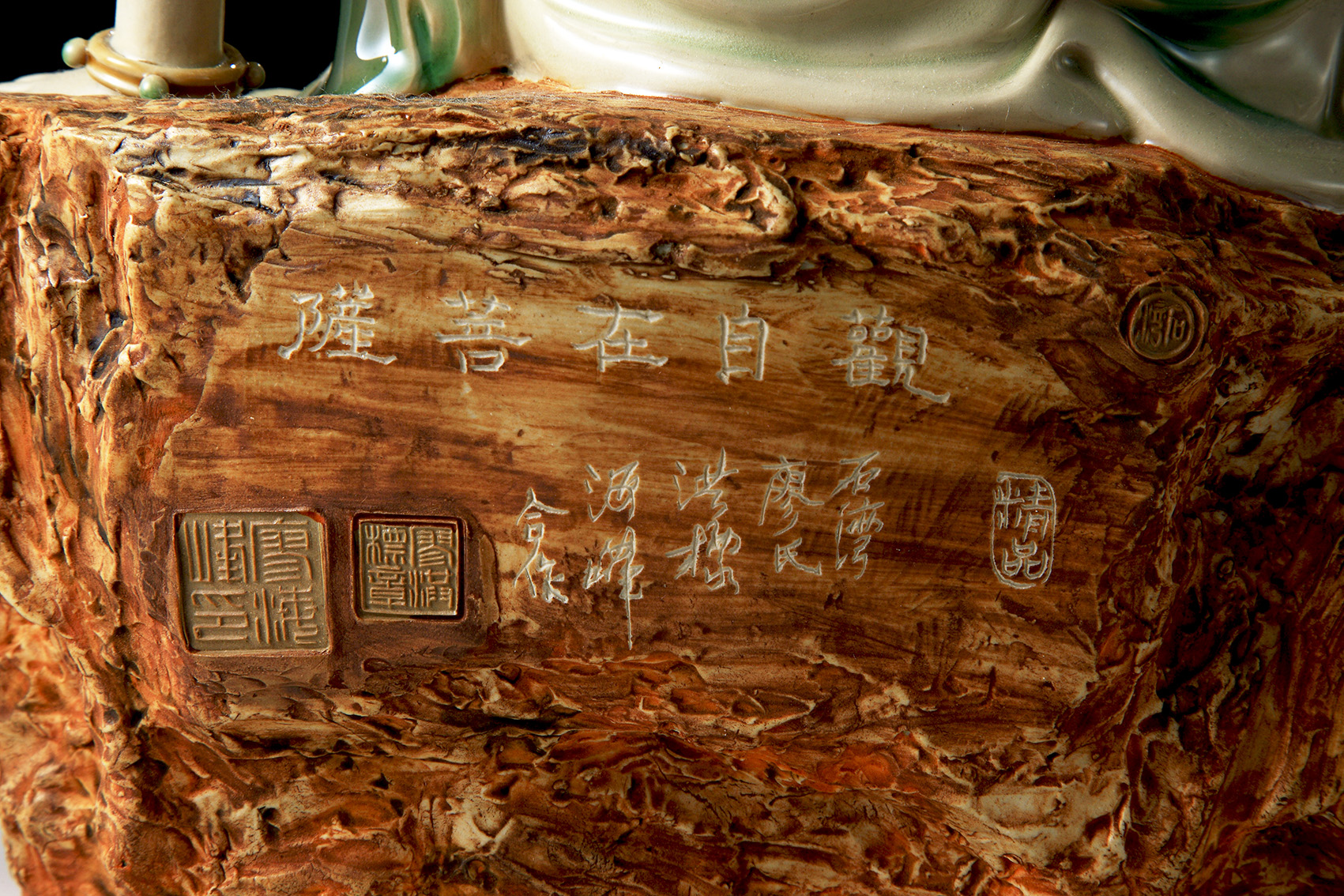
觀自在菩薩
廖洪標
九十年代精製
32×23×40 cm
Avalokitesvara
1990s made with extra care
by Liao Hongbiao
娑婆世界中菩薩是智慧慈悲的象徵,助佛陀化育眾生,在眾多菩薩中以觀自在菩薩最受歡迎,祂因解脫世間苦的真智而自在,又因祂隨時都在傾聽世人的心聲,所以又稱為「觀世音菩薩」。祂的造型在印度大都是男子,在中國唐宋之後;便完全以溫柔嫻雅的女性造型表現。
廖洪標作觀音,為求完美的具象化,注重作品藝術內涵的精神表現,而非強調其宗教形象。他根據敦煌莫高窟的菩薩雕像,美國波斯頓博物館藏宋代木雕觀音,及張大千於敦煌壁畫中臨摹之觀音,等眾多資料,深入研究前人所塑、所畫之各種姿態、法相、衣飾等,集造型優點結合自己潛藏的構思及創作理念, 終於在退休前脫胎幻化而出。
佛具有人性,人亦皆有佛性,廖洪標以清淨完美的形象塑出觀自在菩薩的慈悲,也塑出自己對完美的執著,藉由藝術創作共鳴,拉近佛我之間距離,感受作品內在思想感情,領悟其「內心自在」的智慧,使人在此氣氛中自然地產生一種「觀自我,觀身邊的人,觀世間聲音」的超脫感,進而達到智慧的彼岸, 精神上真正的「觀自在」。
造像取唐代帝王與臣民最不拘束的一種坐姿(或稱遊戲坐)來表現菩薩的慈悲關懷親和力。面相取女相中之丈夫相,偏中性相,溫柔清麗,優雅端莊,純潔完美。觀音坐姿閑靜瀟灑,悠然和諧地坐著,身軀微向前傾,好像在傾聽世間音,又好似在冥思。廖洪標將現代人體美學藝術運用到傳統抽象的女性造像, 藉著優雅的姿態、豐腴的形體及柔潤的手相,呈現作品人性化的內涵及無限的生命力。此作品所散發的氣質超凡脫俗,使人情感昇華。
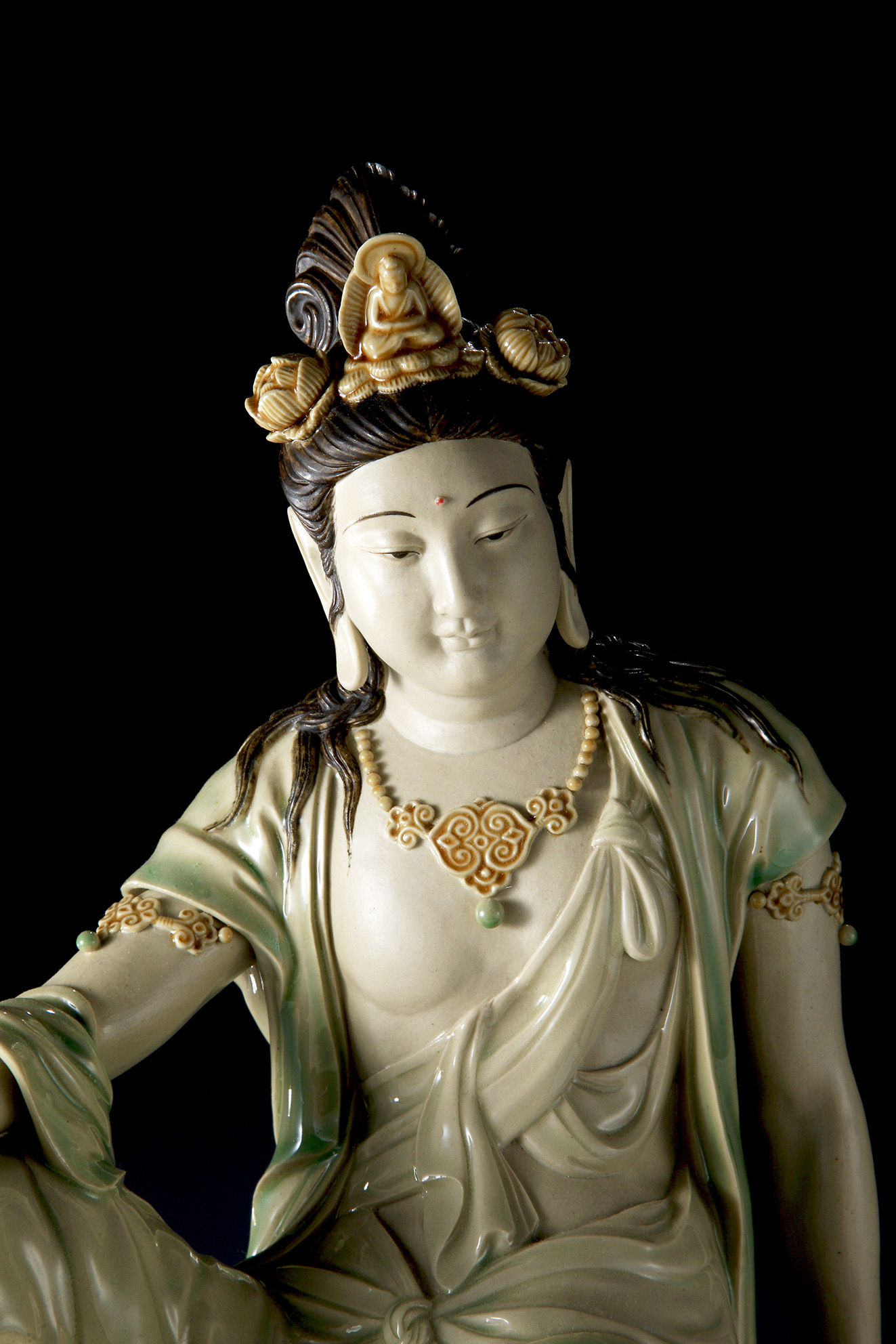
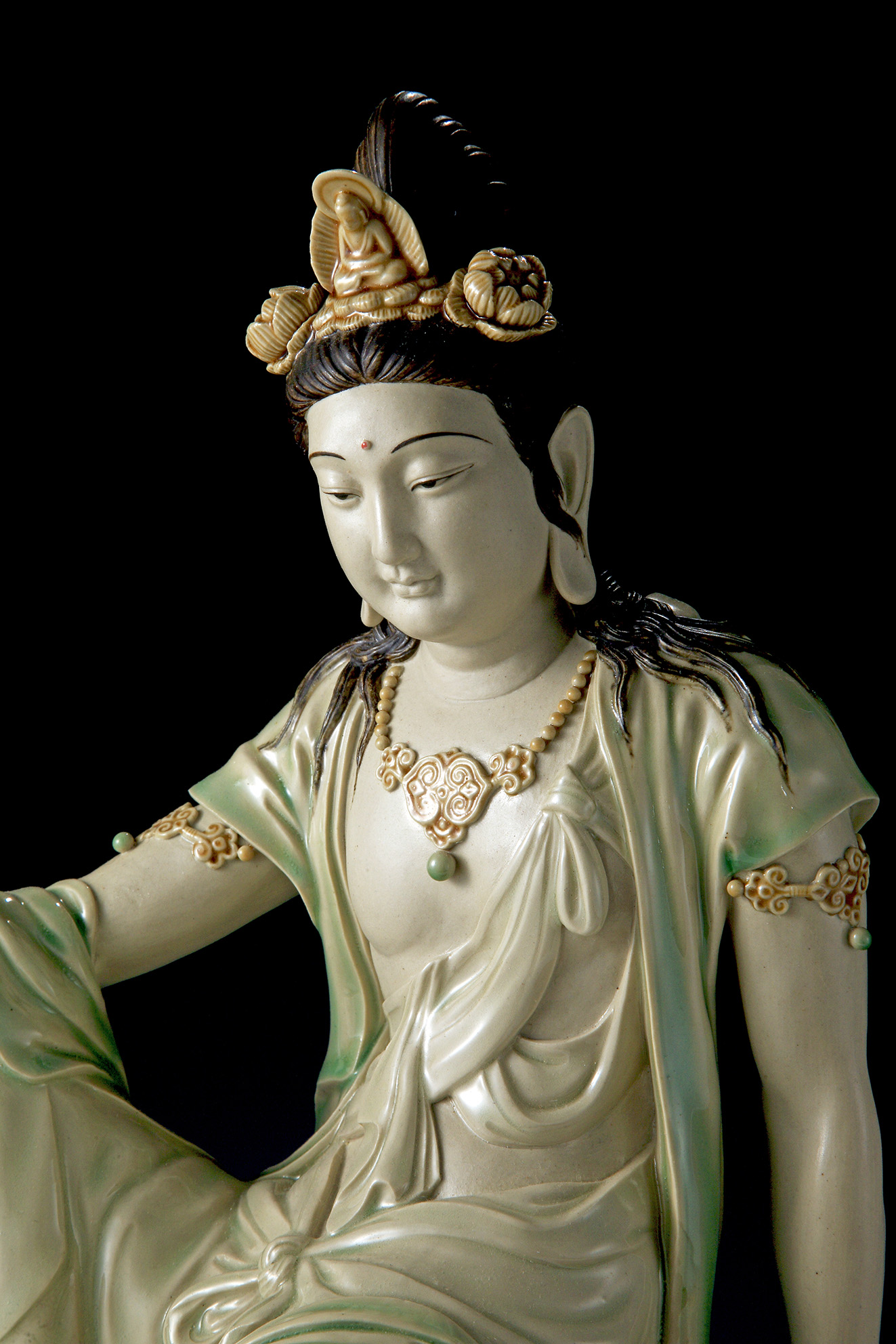
作品在視覺上提供一種超越時空距離的美感;整體造型,身體塊面弧度變化豐富,其髮型(五根一束)及衣飾蘊含濃厚的唐宋風格,上衣、短裙、長裙、喇叭褲、飄帶等褶紋如自然山水韻律節奏,飄逸流暢,坐姿上, 富王者尊貴的風範。衣服以透明仕女綠釉深、淺、淡三種對比色,配件如手環、臂釧、瓔珞、頭花、頂上佛等,用金黃色潤澤,青綠交輝,金碧相映,使作品不但富有生氣及變化,更凸顯了人物內在氣質的典雅,靈氣洋溢,自在安詳。
若問廖洪標此生最難創作、最辛苦的便是觀音了。廖氏以刻畫清瘦的老人見長,而創作如此豐潤美感的塑像,實在是一大挑戰。而為了表現唐、宋時期觀音的古味,既要合乎現代人審美,又不能用太寫實的手法,大師的功力於此顯現。
In the mundane world, Bodhisattvas are a symbol of wisdom and mercy and they assist the Buddha to enlighten all living creatures. Guanyin (Avalokitesvara) is the most popular Bodhisattva. She possesses genuine wisdom that enables her to be free from all kinds of worldly worries, and because of her wisdom she can achieve perfect enlightenment and obtain permanent freedom. As she listens to the thoughts of every one, she is named Guanshiyin Pusa (The Bodhisattva who observes the sounds of the world). In India, Guanyin usually takes the form of a male. In China, the Bodhisattva has been taking the form of a tender, elegant female since the Tang Dynasty.
In order to achieve the perfect expression of the image of Guanyin, Liao Hongbiao placed the emphasis on the spiritual connotations of his work but not on its religious form. He had made reference to the statues of Guanyin in Mogao Caves in Dunhuang, the wood statue of Guanyin of the Song Dynasty kept by the Museum of Fine Arts, Boston, the United States, and Zhang Daqian’s copy of Guanyin’s hand gestures in a series found in the Dunhuang frescoes. After having studied meticulously different poises, expressions and accessories of Guanyin in many statues and paintings, Liao integrated all the merits of the forms he had studied and combined them with his own contemplation and concepts of creation. In the end, he produced a wonderful masterpiece before he retired.
The Buddha embraces human nature and man possesses the Buddha nature. Liao Hongbiao presents the mercy and compassion of Avalokitesvara with a pure and perfect image. Meanwhile, he also expresses his attachment to the pursuit of perfection. By means of the resonance aroused by his art, he has shortened the distance between the Buddha and himself. His work enables the viewer to feel the thoughts and emotions that it is supposed to convey, to be enlightened with the wisdom of “feeling comfort in one’s heart”. Embedded with such aura, one will naturally achieve the status of unearthliness in which one “observes himself, observes those around him, observes sounds in the world”. Ultimately, he will reach the far shore (the Paradise of Buddhism) – obtaining the genuine spiritual freedom and comfort.
The statue takes the poise of youxizuo (the figure bends one leg and places an arm on the knee, and supports her body with the other arm, while the other leg hangs), a sitting poise that was of the least restraints, adopted by anyone, royal or civilian, in the Tang Dynasty. This is a sitting poise ideal for presenting Guanyin’s qualities of mercy, compassion and amiableness. The face is that of a woman’s, and it carries a touch of masculinity, making it appear tender, elegant, pure and perfect. Sitting there calmly, casually and elegantly, and leaning a bit forward, Guanyin seems to be observing the sounds of the world or in meditation. Liao Hongbiao has applied the modern esthetic art of the human body to the making of a traditional and abstract feminine image. By means of the elegant poise, the full and round torso and the tender and smooth gestures of the hands, the statue conveys a strong sense of personalized connotations and infiniteness of vitality. This piece of art touches the viewer with its unearthliness and enables him to achieve sublimation of his emotions.
Visually, the piece offers a kind of beauty produced by a sense of transcendence of time and space. When one looks at the overall composition of the statue, he is amazed by the richness of details displayed by its facets and curves. The hairstyle (five threads in a strand) and the attire are typical of that of the Tang and Song era. The folds of the blouse, the skirt, the dress, the flared trousers and the bands are as natural as the rhythm of the mountains and waters in nature. They are so graceful that they make the wearer look majestic. The transparent Green Glaze used for ladies is applied on the attire in three different tones, dark, light and pale. The yellowish gold colour is used to highlight the accessories like wrist bracelets, arm bracelets, necklaces of jade and pearls, headdress flowers and the figure of Amitabha on Guanyin’s head. The combination of the colours of gold and green of different tones enrich the vitality and the richness of details of the piece and highlights the figure’s qualities of elegance, heavenliness and calmness.
When asked what has been his most difficult and painstaking work, Liao Hongbiao will definitely say “Guanyin”. The artist has always been specialized in portraying the meagre elderly, and it was indeed a great challenge for him to produce such a full, round and elegant statue. Without having used techniques that seemed too realistic, he succeeded in expressing the classic elegance of the Tang and Song era and at the same time meeting the modern criteria of esthetics. Only a genuine master could have achieved this.
 HOME
HOME