©陶陶居藝廊擁有所有照片的版權, 嚴禁盜用
©Tao Tao Art holding the copyright of all photos. Unauthorized use is strictly prohibited.


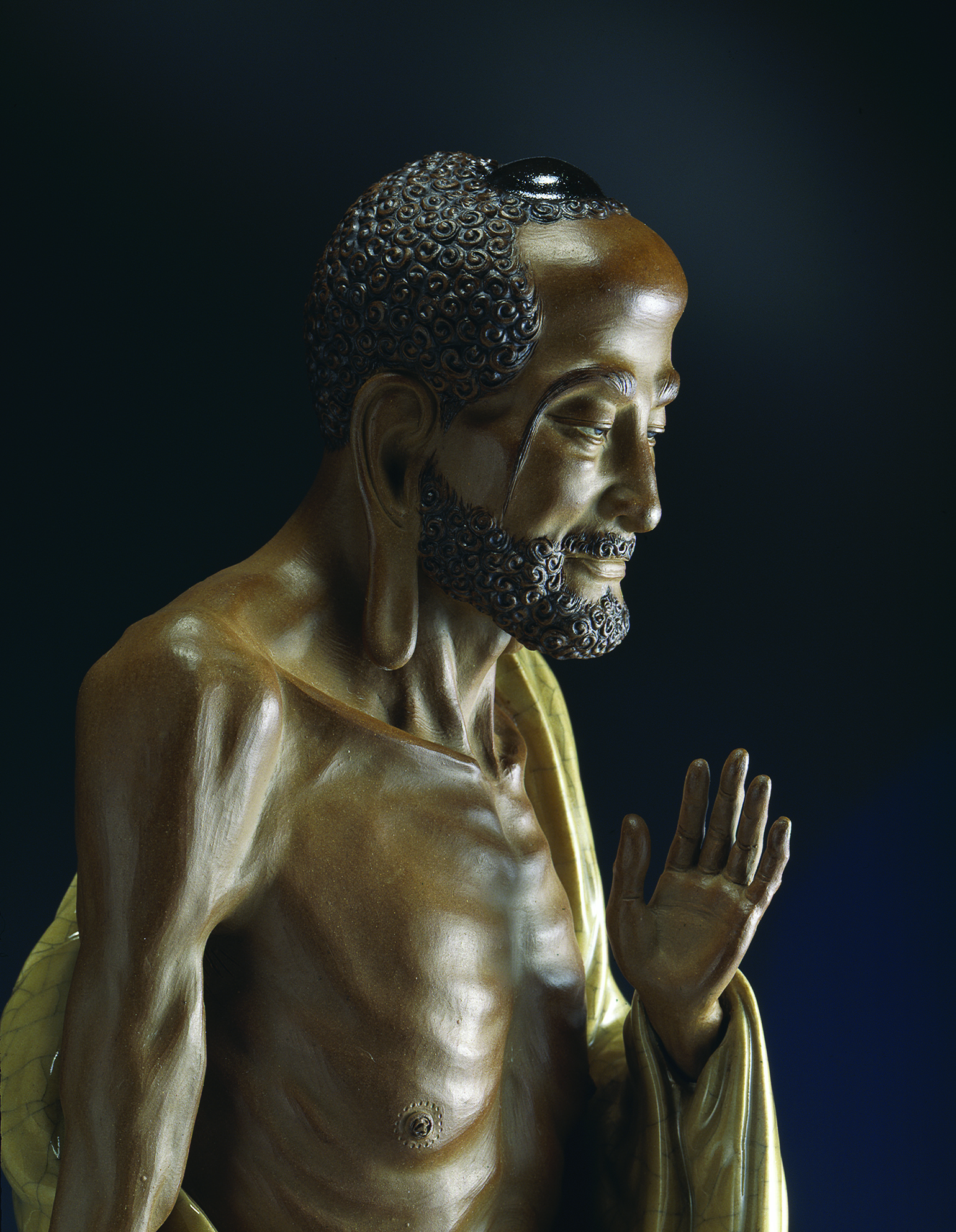
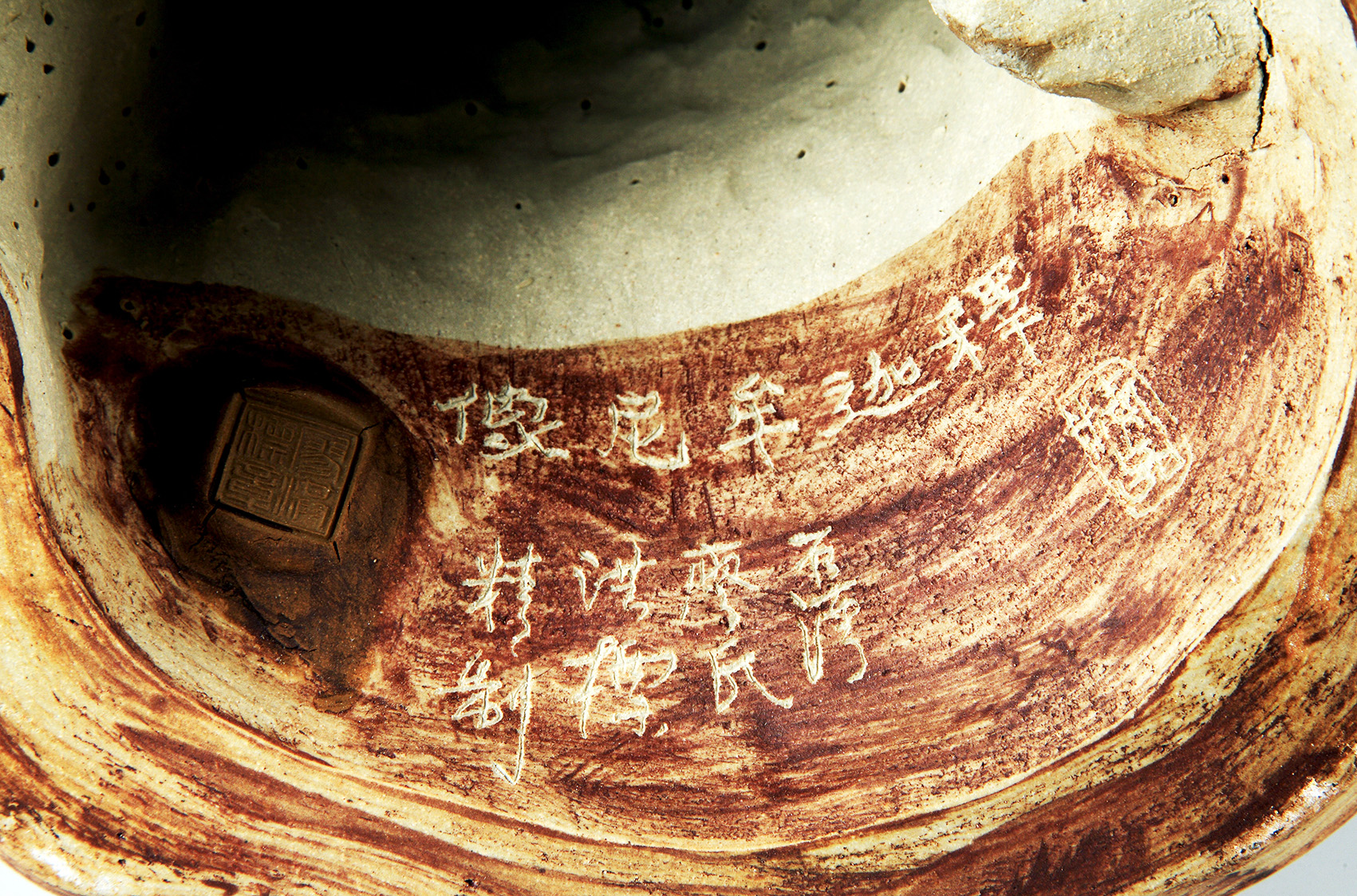
釋迦牟尼立像
九十年代
廖洪標精製
20×23×53 cm
The Standing Buddha Sakyamuni
1990s
made by Liao Hongbiao with extra care
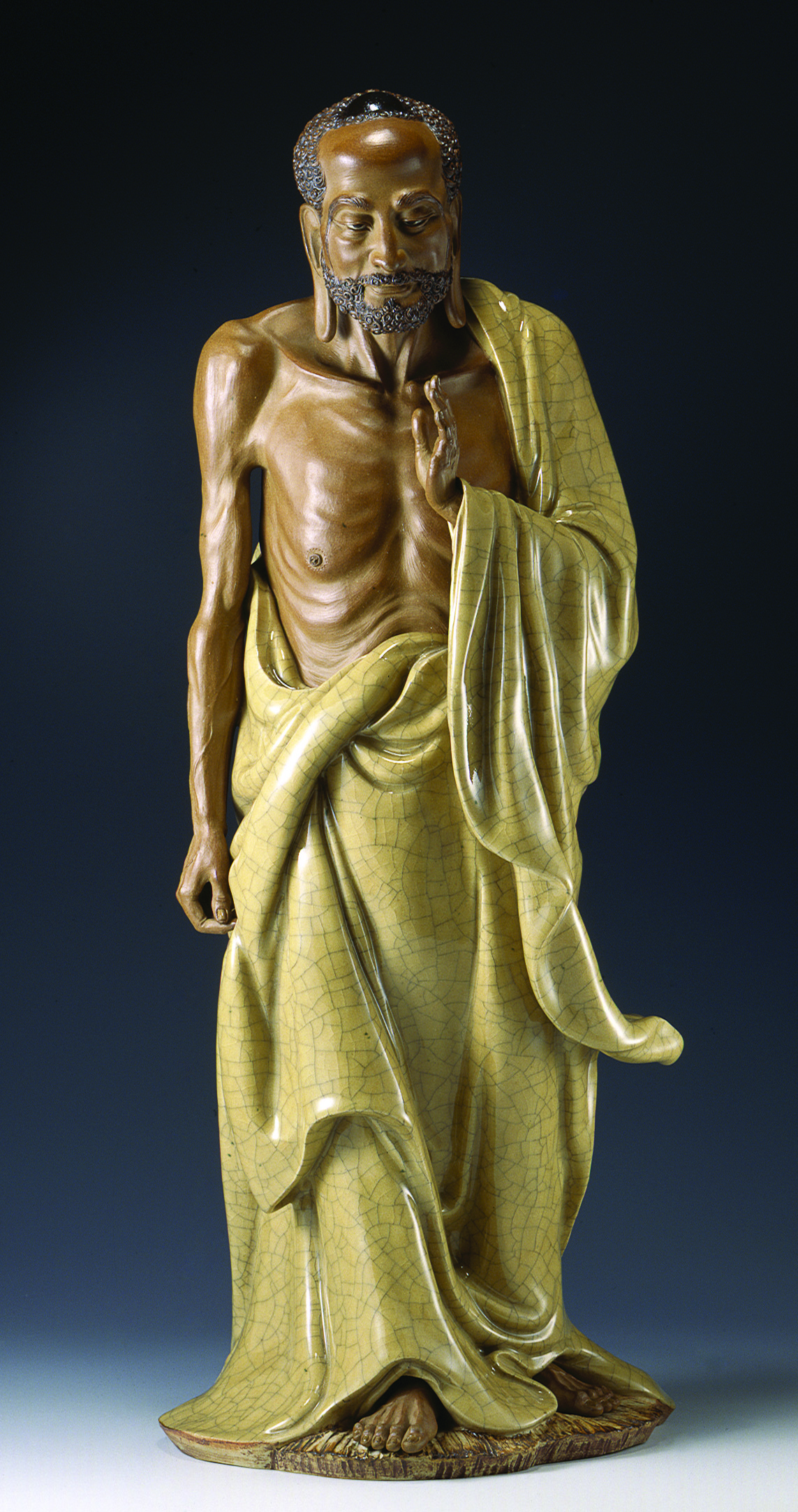
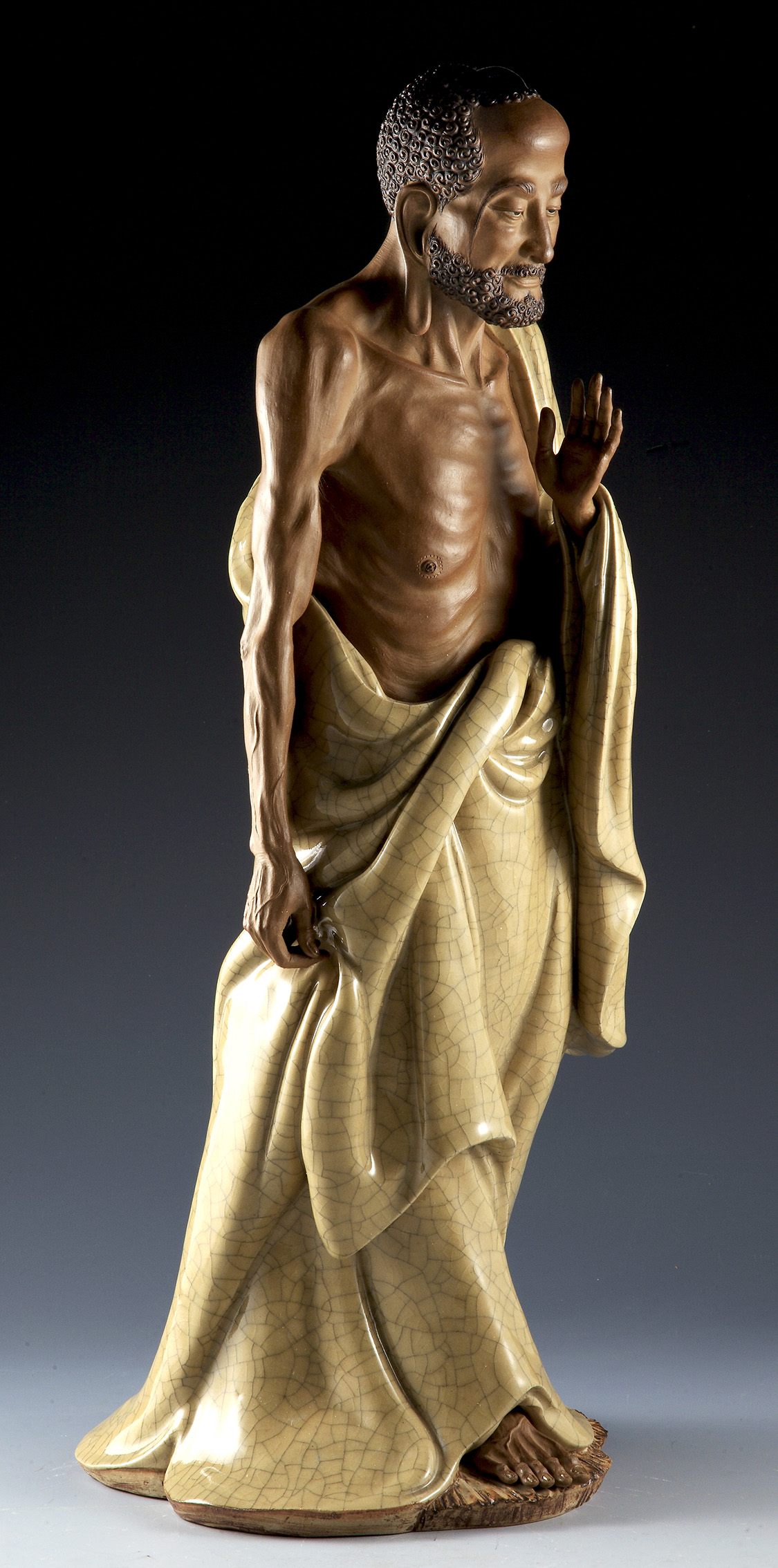
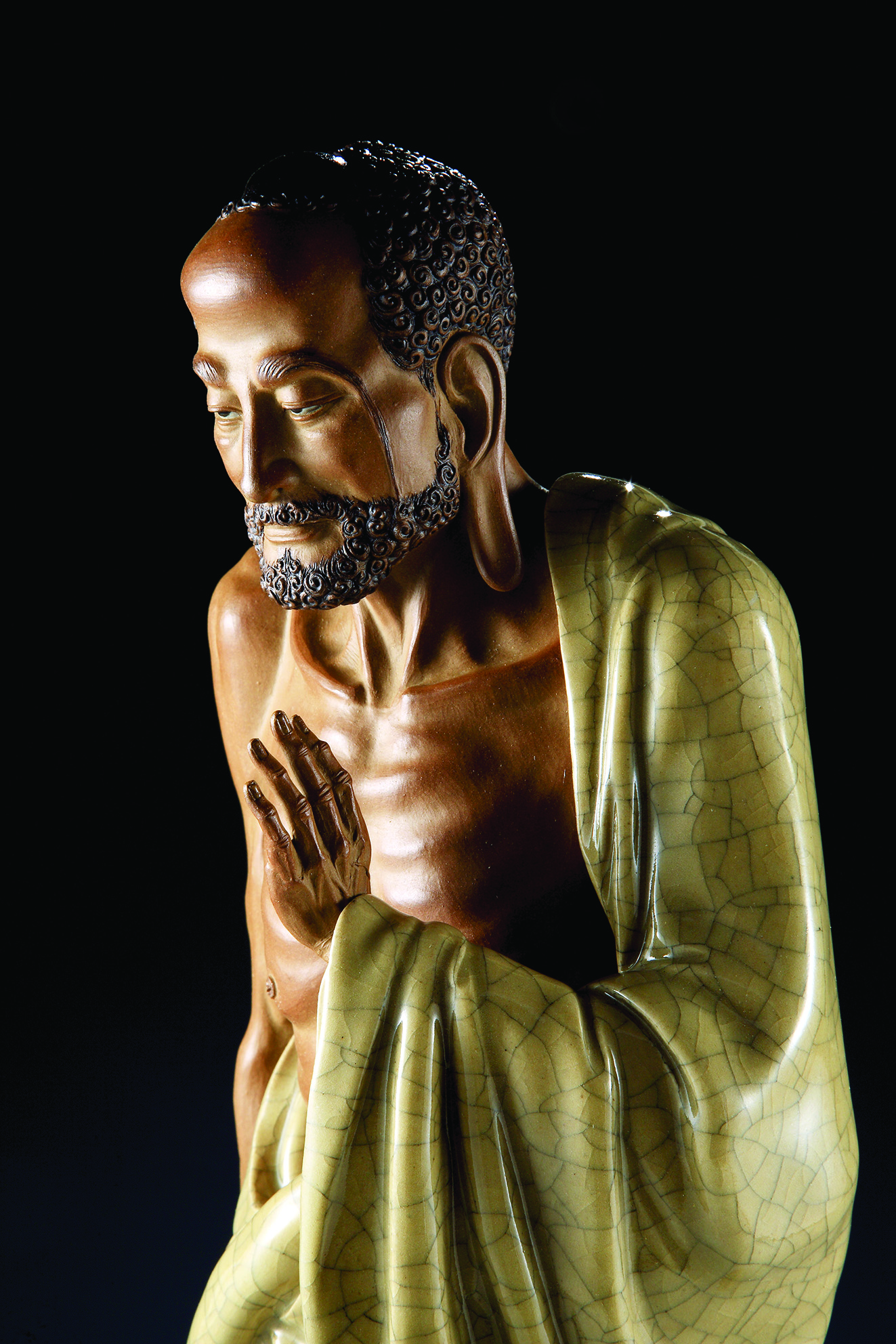
此尊釋迦牟尼立像,作品以樸素的胎土自然特色,表達人物苦行修煉所必然的清瘦形象、豐富神化內涵。 並強調面部、手態、肌肉的形體,與肅穆下垂的衣袖形成對比,體現人物善良一苦行一佛陀(覺悟者)的心路 歷程,與堅定、虔誠、高潔的形象。 人物上身微向前傾,加強釋迦苦行得正覺、積極進取之勢,下身由邁出的右腿配合袈裟的衣摺及飄拂的大 袖,形成三條直線,打破長方形垂直構圖的呆滯,同時增加作品重心落點的穩重度。在剛勁的筋肋間,添加幾 筆略帶鬆弛的肌肉;在深邃的目光下,喃喃顫動的嘴唇,使這位佛教開拓者教化世人的形象十分傳神。 行善的釋迦牟尼立像對比著悟道的坐像,右手提衣擺,右腳跨出,正是佛家核心價值「普渡眾生」的體 現,動作是「行善」,已由苦思悟道進而入世,救人脫離苦海。藉由形象表達了豐厚深刻的內在哲學思維。
In this statue of the standing Buddha Sakyamuni, the necessarily lean image and the rich, deified connotations of an ascetic are expressed by the natural features of plain biscuit. The contours of the face, hands and muscles are highlighted to create contrasts against the solemnly hanging sleeves, with the aim of presenting the figure’s mental journey: kindness – ascetic life – the Buddha (the enlightened), and his image of perseverance, piety and nobleness. The upper body of the figure leans slightly forward and this reinforces the positive attitude of the ascetic Buddha Sakyamuni who is determined to attain enlightenment. The stretching right leg, and drapery of the cassock and the big floating sleeve form three straight lines on the lower part of the body, and they make a breakthrough to the banal traditional vertical composition of rectangles. Meanwhile, they also reinforce the steadiness of the centre of gravity of the statue. Some slightly lax muscles are found in between the powerful tendons and ribs. The abstruse eyesight and the trembling and murmuring lips bestow the founder of Buddhism with a very vivid image of someone who is determined to enlighten the world. In contrast with the sedentary Buddha Sakyamuni who tries to attain enlightenment, the standing Buddha is doing good. He holds the hem of his gown with his right hand, and his right foot strides forward. Such a poise reveals the core value of Buddhism: to enlighten all living creatures, and the action to realize this core value is “doing good”. The statue tells the viewer that after having finished his arduous contemplation and attained enlightenment, the Buddha is going to enter the world to rescue people from the abyss of misery. Such an image expresses the profound philosophical thinking of the figure.
 HOME
HOME